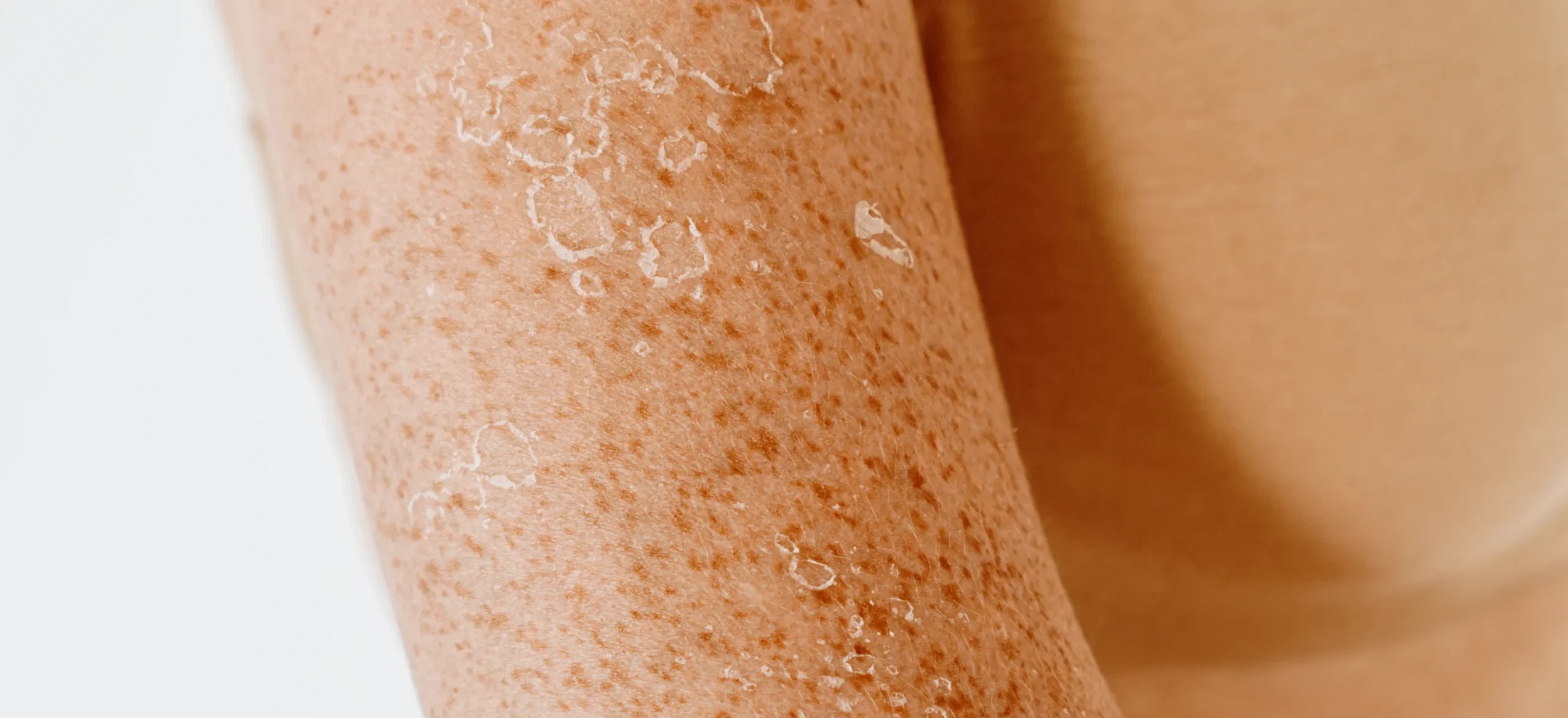
Can Dry Skin Cause Spots? A Complete Guide
Key Takeaways
- Dry skin does not directly cause acne, but dryness and irritation can contribute to bumps, inflammation, and clogged pores.
- Dry skin and acne can happen at the same time, especially when skincare products or acne treatments irritate the skin.
- Overwashing and excessive exfoliation can make dryness and spots worse by weakening the skin barrier.
- Moisturizing is still important when you have spots. Choose a suitable, non-comedogenic moisturizer if you are prone to clogged pores.
- Not every spot is acne. Persistent, painful, itchy, or unusual bumps may have another cause and should be checked by a dermatologist.
Dry skin and spots are often thought of as two completely different skin problems. Dry skin is usually associated with tightness, flaking, and rough patches, while spots are more commonly linked with oily skin and blocked pores.
The reality is a little more complicated.
Dry skin can contribute to the appearance of spots in some people, but dry skin itself does not directly cause every type of spot. When the skin becomes very dry or irritated, it can affect the skin barrier and lead to inflammation. Certain moisturizers, skincare products, or habits used to deal with dryness can also contribute to blocked pores.
At the same time, what looks like a spot may not always be acne. Dry skin can cause small bumps, irritation, redness, or flaky patches that may be mistaken for pimples.
Understanding the difference can help you choose the right skincare routine.
What Is Dry Skin?
Dry skin occurs when the skin does not have enough moisture and natural oils to maintain a healthy protective barrier.
You may notice:
- Tight or uncomfortable skin
- Flaking
- Rough texture
- Itching
- Redness
- Fine lines that appear more noticeable
- Peeling
- Increased sensitivity
Dry skin can occur anywhere on the body, but it is especially common on areas such as the hands, arms, legs, and face.
The causes can include cold or dry weather, hot showers, harsh cleansers, over-exfoliation, certain medications, aging, and some skin conditions.
What Are Spots?
The word “spots” can mean different things.
Some people use it to describe acne pimples, while others use it for any small red or raised mark on the skin.
Spots can include:
- Whiteheads
- Blackheads
- Papules
- Pustules
- Irritated bumps
- Inflammatory spots
- Folliculitis
- Small areas of skin irritation
Because these conditions can look similar, it is not always possible to determine the cause simply by looking at the skin.
Can Dry Skin Cause Acne?
Dry skin does not directly create acne in the same way that a blocked pore can.
Acne develops when hair follicles become clogged with oil, dead skin cells, and other material. Hormonal changes can increase oil production and contribute to acne.
However, dryness can indirectly make the situation more complicated.
When the skin barrier becomes irritated, the skin may become more sensitive and inflamed. A person may also use heavier creams or oils to relieve dryness, and some products may contribute to clogged pores in acne-prone individuals.
This means someone can have dry skin and acne at the same time.
Having acne does not necessarily mean your skin is oily everywhere.
How Can Dry Skin Contribute to Spots?
There are several possible connections between dryness and spots.
Damaged Skin Barrier
The outer layer of your skin helps protect it from irritants and helps maintain moisture.
When this barrier is disrupted, the skin can become more sensitive and irritated.
Using strong cleansers, scrubs, or exfoliating acids too frequently can make this worse.
Dead Skin Cell Buildup
Dry, flaky skin can lead to an accumulation of dead skin cells on the surface.
These dead cells do not automatically cause acne, but when combined with oil and other material, they can contribute to clogged pores in acne-prone skin.
Irritation
Very dry skin can become red and inflamed.
Small irritated bumps may sometimes look like acne even when they are not caused by blocked pores.
Heavy Moisturizers
People with dry skin often need moisturizers, but some thick products may not work well for every acne-prone person.
This does not mean you should stop moisturizing.
Instead, look for a moisturizer that provides hydration without feeling excessively heavy or greasy on your skin.
Can Dry Skin Cause Red Spots?
Yes, dry skin can be associated with red areas or small red bumps.
However, redness does not automatically mean acne.
Dryness can irritate the skin and make small blood vessels more noticeable. Flaking and inflammation can also make the skin appear red.
Conditions such as eczema, contact dermatitis, rosacea, and other forms of irritation can also cause redness.
If red spots continue, spread, itch significantly, become painful, or do not improve with basic skincare, it is worth getting professional advice.
Can Dry Skin Cause White Spots?
Dryness can make areas of the skin appear lighter or flaky, but true white spots can have many causes.
A lighter patch may result from dryness, post-inflammatory changes, fungal infections, pigment changes, or other skin conditions.
Because there are many possible causes, persistent white patches should not automatically be blamed on dry skin.
Can Dry Skin Cause Small Bumps?
It can contribute to rough, uneven skin texture, but small bumps have many possible causes.
For example, irritation, clogged pores, keratosis pilaris, folliculitis, allergic reactions, and other conditions can produce small bumps.
If the bumps are mainly around the hair follicles and feel rough rather than looking like traditional pimples, they may not be acne.
Can Overwashing Make Spots Worse?
Yes.
Washing your face too frequently or using harsh cleansers can strip away some of the skin’s natural oils.
This can leave the skin feeling dry and irritated.
People sometimes respond by washing even more because they believe spots mean the skin is dirty. This can create a cycle of cleansing, dryness, irritation, and more visible inflammation.
A gentle cleanser used appropriately is generally a better approach than repeatedly scrubbing the skin.
Can Exfoliating Help Dry Skin and Spots?
Exfoliation can help remove dead skin cells, but more is not always better.
Physical scrubs and strong exfoliating products can irritate already dry skin.
If your skin is dry, sensitive, or irritated, frequent exfoliation may make the problem worse.
People with acne sometimes use ingredients such as salicylic acid because it can help unclog pores. However, it can also be drying or irritating for some people.
The right frequency depends on your skin and the product.
Should You Moisturize If You Have Spots?
Yes.
Having spots does not mean you should avoid moisturizer completely.
In fact, keeping the skin adequately moisturized can help support the skin barrier.
If you have acne-prone skin, look for products labeled non-comedogenic, meaning they are formulated to be less likely to clog pores.
A lightweight lotion, gel moisturizer, or other suitable product may work better for some acne-prone people than a very heavy cream.
However, skin types differ, so a product that works for one person may not work for another.
What Ingredients Are Good for Dry, Spot-Prone Skin?
There is no single ingredient that works for everyone.
For dry skin, commonly used moisturizing ingredients include:
- Ceramides
- Glycerin
- Hyaluronic acid
- Squalane
- Petrolatum
- Fatty acids
Ceramides and other barrier-supporting ingredients can help reduce moisture loss.
For acne-prone skin, ingredients such as salicylic acid and benzoyl peroxide are commonly used, but they can sometimes cause dryness or irritation.
If you are using an acne treatment and your skin becomes extremely dry, speak with a dermatologist or healthcare professional about how to adjust your routine.
What Should You Avoid If Your Skin Is Dry and Spot-Prone?
Certain habits can make both dryness and irritation worse.
Try to avoid:
- Very hot water
- Harsh soaps
- Aggressive scrubbing
- Picking at spots
- Excessive exfoliation
- Using many active ingredients at once
- Fragranced products if they irritate your skin
- Washing your face repeatedly throughout the day
You do not need a complicated skincare routine.
For many people, a simple routine built around gentle cleansing, moisturizing, and sun protection is easier for the skin to tolerate.
Can Weather Cause Dry Skin and Spots?
Weather can affect the skin in several ways.
Cold, dry air can increase moisture loss from the skin.
Strong heat can also contribute to sweating, dehydration, and irritation.
Air conditioning and indoor heating can reduce indoor humidity and make skin feel drier.
Seasonal changes can therefore affect people who are prone to both dryness and spots.
If your skin becomes noticeably drier during a particular season, adjusting your moisturizer and cleansing routine may help.
Can Dehydration Cause Dry Skin and Spots?
Dehydration and dry skin are related but not exactly the same thing.
Dry skin is a skin condition in which the skin lacks sufficient oil and moisture. Dehydration refers to a lack of water in the body.
Drinking enough fluids is important for overall health, but simply drinking more water does not necessarily fix every case of dry skin.
The skin barrier, environment, skincare products, and underlying skin conditions also matter.
Is It Possible to Have Dry Skin and Oily Skin?
Yes.
Some people have combination skin, meaning certain areas are oily while others are dry.
For example, the forehead, nose, and chin may become oily while the cheeks feel dry or tight.
A person can therefore have acne in oily areas while experiencing dryness elsewhere.
This is one reason it can be unhelpful to classify the entire face as simply “dry” or “oily.”
How Can You Tell If a Spot Is From Dryness or Acne?
There is no perfect way to tell without examining the skin, but some general differences can help.
Acne spots may include whiteheads, blackheads, inflamed pimples, or pus-filled pustules.
Dryness-related irritation may look more like flaking, rough patches, tightness, redness, or small irritated bumps.
However, these symptoms can overlap.
If you are unsure, particularly if the condition is persistent or worsening, a dermatologist can help identify the cause.
A Simple Routine for Dry, Spot-Prone Skin
A basic routine can help avoid unnecessary irritation.
Morning
Start with a gentle cleanser if you need one. Follow with a moisturizer suited to your skin type.
During the day, use broad-spectrum sunscreen with an appropriate SPF.
Evening
Cleanse gently to remove dirt, oil, sunscreen, and makeup.
Apply your prescribed or chosen acne treatment if you use one.
Finish with moisturizer.
If your skin becomes increasingly dry or irritated after introducing an acne treatment, do not automatically add more products. Give your skin time to adjust and consider asking a healthcare professional for guidance.
When Should You See a Dermatologist?
Consider professional advice if:
- Spots continue for several weeks
- Acne is painful or severe
- You develop deep or large lesions
- Your skin is cracking or bleeding
- Dryness is severe
- You have persistent itching
- You develop widespread redness
- Products consistently cause burning
- You are developing scars or dark marks
- You are unsure whether the spots are acne
A dermatologist can determine whether the problem is acne, dryness, dermatitis, folliculitis, or another skin condition.
Can Treating Dryness Improve Spots?
If dryness and irritation are contributing to the appearance of bumps or inflammation, improving the skin barrier may make the skin look and feel better.
However, moisturizing alone will not necessarily clear acne.
If your spots are caused by clogged pores or another skin condition, you may need a treatment specifically designed for that problem.
The goal is usually to find a balance between treating acne and protecting the skin barrier.
Frequently Asked Questions
Can dry skin cause sudden breakouts?
Dryness itself may not directly cause a breakout, but irritation, changes in skincare products, and a weakened skin barrier can contribute to new bumps or spots.
Can using too much moisturizer cause spots?
It can happen if a product is too heavy for your skin or contributes to clogged pores. Choosing a suitable non-comedogenic moisturizer can help reduce this concern.
Can dry skin make acne look worse?
Yes. Dryness can cause flaking and irritation around existing acne, making spots appear more noticeable and uncomfortable.
Can a damaged skin barrier cause pimples?
A damaged skin barrier does not directly create acne, but irritation and inflammation can make acne-prone skin more difficult to manage.
Can dry skin cause blackheads?
Dryness itself does not directly create blackheads. Blackheads form when pores become clogged, although excess dead skin cells can contribute to clogged pores.
Can dry skin cause acne scars?
Dry skin does not directly cause acne scars. However, picking or squeezing irritated spots can increase the risk of marks and scarring.
Can changing skincare products cause spots?
Yes. Introducing a new product can sometimes cause irritation or clogged pores, particularly if the product does not suit your skin.
How long does it take for dry skin to improve?
It varies depending on the cause and severity. Mild dryness may improve relatively quickly with gentle skincare, while persistent dryness may require professional evaluation.
Can dry skin cause spots on the body?
Yes, dry or irritated skin can develop bumps or spots on areas such as the arms, legs, back, and chest. The exact cause can vary.
Why does my skin become dry and break out at the same time?
Several factors can contribute, including weather changes, harsh skincare products, acne treatments, hormonal changes, and an impaired skin barrier.
Conclusion
So, can dry skin cause spots?
Dry skin does not directly cause every type of spot, but it can contribute to irritation, inflammation, rough texture, and conditions that may make spots more noticeable. Dry skin and acne can also occur together, which is why treating acne by aggressively drying out the skin is not always a good approach.
A gentle skincare routine can help. Avoid excessive washing and scrubbing, use an appropriate moisturizer, and choose products that suit your skin type. If you use acne treatments, pay attention to signs of excessive dryness or irritation.
Most importantly, remember that not every bump or red mark is acne. Persistent, painful, itchy, or unusual spots may have another cause and may require an evaluation by a dermatologist.
Taking care of the skin barrier while addressing the actual cause of the spots is generally a better approach than trying to dry the skin out completely.

Comprehensive Skincare for Patients of All Ages
BOOK AN APPOINTMENTSince 1982, Palm Beach Dermatology Group has developed treatment plans that reflect our patients’ goals for healthy and beautiful skin. The doctors and professionals on our team have attended top schools, like Brown University, NYU, and the University of Miami, received special honors, and contributed to esteemed medical journals.
Our background and knowledge of the latest pharmaceutical technologies enable us to uphold the highest safety standards and deliver quality service and care to our patients. At PGA Dermatology Skin & Aesthetics Center, we make you feel comfortable and treat you like family from the moment you step inside our waiting room.