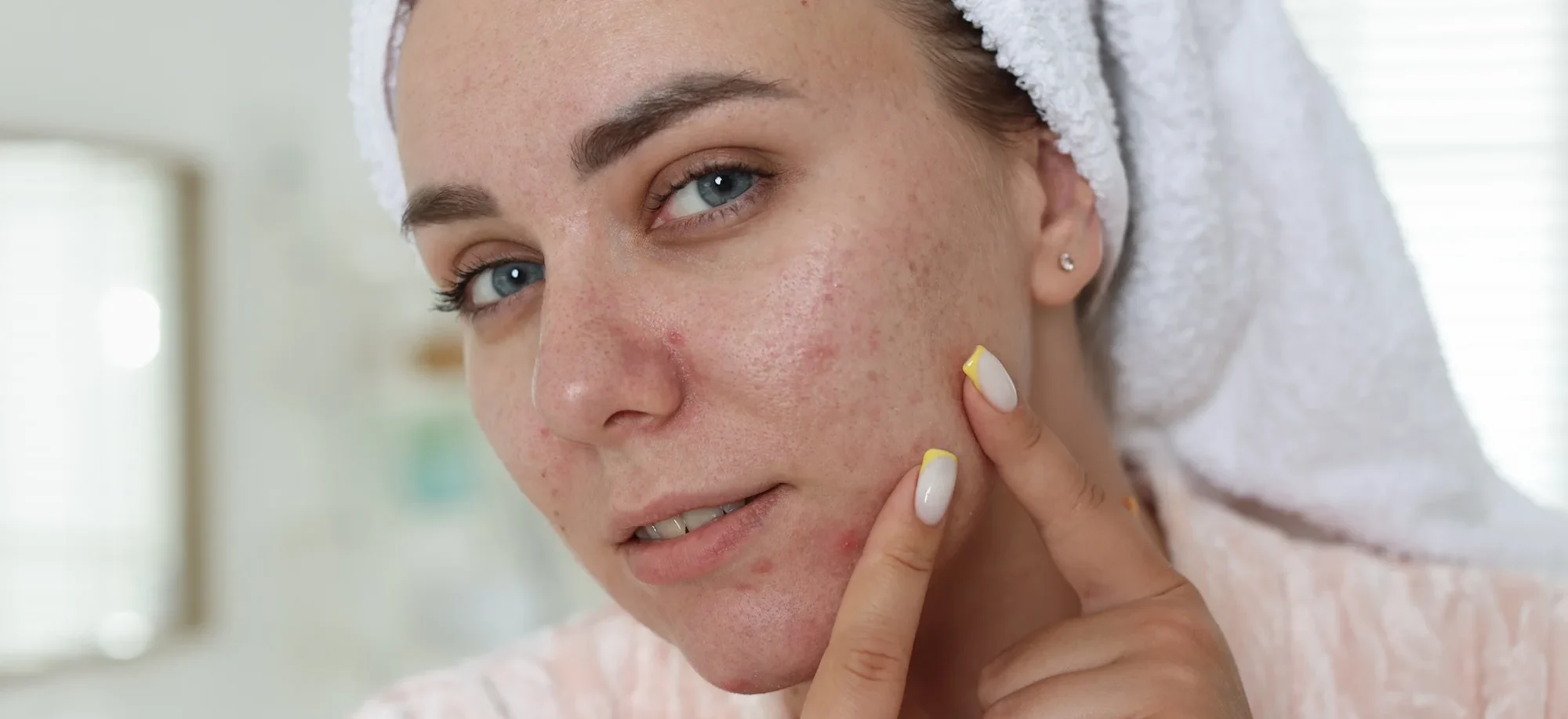
Can Dry Skin Cause Acne? What You Need to Know
Key Takeaways
- Dry skin does not directly cause acne, but excessive dryness and irritation can contribute to breakouts.
- Over-washing and harsh skincare products can strip the skin and make both dryness and acne worse.
- Dry and acne-prone skin can occur together, especially when acne treatments cause irritation.
- A non-comedogenic moisturizer can help keep the skin hydrated without unnecessarily clogging pores.
- The goal is to treat acne while protecting the skin barrier, rather than trying to remove all oil from the skin.
When people think about acne, oily skin is usually the first thing that comes to mind. This makes sense because excess oil can mix with dead skin cells and clog pores. But what if your skin feels dry, tight, or flaky and you are still getting pimples?
It is a common question: Can dry skin cause acne?
The answer is a little more complicated than simply saying yes or no. Dry skin itself does not directly cause acne in the same way that clogged pores, excess oil, inflammation, and other acne triggers do. However, dry and irritated skin can contribute to breakouts, especially when you use harsh products or try to remove all the oil from your face.
In some cases, the products used to treat dry skin can also contribute to clogged pores if they are not suitable for acne-prone skin.
Understanding the connection between dryness and acne can help you build a skincare routine that keeps your skin comfortable without making breakouts worse.
Can Dry Skin Cause Acne?
Dry skin does not directly create acne, but it can make the skin more irritated and may contribute to breakouts.
When your skin becomes very dry, you may be tempted to scrub away flakes, wash your face more often, or use strong acne products. These habits can irritate the skin further. The American Academy of Dermatology notes that overly drying or irritating the skin can contribute to more acne.
There is also another factor. According to the American Academy of Dermatology, when skin becomes dry, the body may produce more oil. Extra oil can combine with dead skin cells and clog pores, potentially leading to more breakouts.
So, while dry skin is not necessarily the direct cause of acne, dryness, irritation, and changes in oil production can create conditions that make acne more difficult to manage.
Why Does Dry Skin Sometimes Lead to Breakouts?
Your skin has a natural protective barrier that helps keep moisture inside and protects the skin from outside irritants.
When the skin becomes excessively dry, this barrier can become disrupted. The skin may feel tight, rough, flaky, itchy, or irritated.
If you respond by using harsh cleansers, alcohol-based products, frequent exfoliation, or aggressive acne treatments, the irritation can become worse.
The American Academy of Dermatology recommends avoiding habits such as repeatedly washing the face, scrubbing the skin, or intentionally drying out acne-prone skin.
This is why trying to make acne disappear by completely removing oil from your skin can sometimes have the opposite effect.
Can Dry Skin Make Existing Acne Worse?
Yes, dry and irritated skin can make existing acne more uncomfortable and may contribute to flare-ups.
For example, someone treating acne with benzoyl peroxide, salicylic acid, adapalene, tretinoin, or other acne treatments may notice increased dryness. Several common acne treatments can dry and irritate the skin.
When this happens, the answer is not necessarily to stop every acne treatment. Instead, a dermatologist may recommend adjusting the routine and adding an appropriate moisturizer.
Moisturizing can help reduce dryness and improve how well the skin tolerates certain acne treatments.
Can Moisturizer Cause Acne?
A moisturizer does not automatically cause acne.
The type of moisturizer matters.
If you have acne-prone skin, look for products labeled:
- Non-comedogenic
- Oil-free
- Won’t clog pores
These descriptions indicate that the product is designed to be less likely to clog pores.
Some heavy products may not work well for every person with acne. Cleveland Clinic also recommends checking product labels because certain fragrances, oils, butters, and other ingredients may contribute to clogged pores or irritation in some people.
That does not mean everyone with acne needs a very light moisturizer. If your skin is genuinely dry, you may need a richer product. The important thing is finding a moisturizer that provides enough hydration without causing problems for your particular skin.
What Does Dry Skin Look Like?
Dry skin can look different from person to person.
Common signs include:
- Tightness after washing
- Flaking
- Rough texture
- Peeling
- Itching
- Redness
- Fine lines that become more noticeable
- Stinging when skincare products are applied
Very dry skin can even crack or bleed.
Acne, on the other hand, usually appears as blackheads, whiteheads, pimples, pustules, or deeper inflamed bumps.
It is possible to have both conditions at the same time. For example, someone can have dry cheeks with acne around the forehead, nose, chin, or jawline.
Can You Have Dry and Oily Skin at the Same Time?
Yes.
This is often called combination skin.
You might notice dryness around your cheeks while your forehead and nose become oily during the day. Some people may also have an oily T-zone with dry patches in other areas.
Having dry-feeling skin does not necessarily mean your entire face is producing too little oil.
Your skincare routine should therefore be based on how your skin behaves rather than simply choosing products labeled for “dry skin” or “oily skin.”
How Should You Moisturize If You Have Acne?
If your skin is both dry and acne-prone, moisturizing can be an important part of your routine.
Start with a gentle cleanser and avoid using very hot water. After washing, gently pat your face dry rather than rubbing it.
Then apply a moisturizer while the skin is still slightly damp. The American Academy of Dermatology recommends applying moisturizer after washing because it can help trap water in the skin.
Look for a product that is:
- Non-comedogenic
- Fragrance-free if your skin is sensitive
- Suitable for your skin type
- Designed for facial use
Ingredients such as ceramides, glycerin, and hyaluronic acid are commonly used in moisturizers to help support hydration.
Should You Stop Acne Products If They Dry Your Skin?
Not necessarily.
Some effective acne treatments can cause dryness, particularly when you first start using them.
For example, benzoyl peroxide, salicylic acid, adapalene, tretinoin, and other treatments may cause dryness or irritation.
Instead of immediately abandoning treatment, consider discussing the problem with a dermatologist. They may suggest changing how often you use a product, using a different formulation, or adding a moisturizer to reduce irritation.
Do not increase the amount of an acne treatment simply because you want faster results. More product does not necessarily mean faster improvement and may increase irritation.
Common Mistakes That Can Make Dry Skin and Acne Worse
Washing your face too often
Washing repeatedly can irritate the skin and make dryness worse. The American Academy of Dermatology recommends gentle cleansing rather than repeatedly washing acne-prone skin throughout the day.
Scrubbing away flaky skin
It may feel natural to scrub dry patches, but aggressive exfoliation can further irritate already dry skin.
Using harsh products
Products containing irritating ingredients may make dry or sensitive skin feel worse.
Skipping moisturizer
Some people with acne avoid moisturizer because they are afraid it will make their skin oily. But appropriate moisturization can actually help when acne treatments are causing dryness.
Picking or squeezing pimples
Touching or squeezing acne can irritate the skin and increase the risk of marks and scarring.
A Simple Routine for Dry, Acne-Prone Skin
A complicated routine is not always necessary.
Morning
Start with a gentle cleanser if you need one. Follow it with a non-comedogenic moisturizer. During the day, use a broad-spectrum sunscreen with SPF 30 or higher.
Night
Clean your face gently and remove makeup before going to bed. Apply any acne treatment according to the instructions provided by your healthcare professional or product label. Finish with a suitable moisturizer.
If a product consistently causes burning, severe irritation, or worsening dryness, talk with a dermatologist rather than adding more products to your routine.
When Should You See a Dermatologist?
Occasional dryness and a few pimples are usually manageable with a simple skincare routine. However, it is worth speaking with a dermatologist if your acne is persistent, painful, severe, or leaving scars.
You should also seek professional advice if your skin remains extremely dry despite using moisturizer, or if it becomes cracked, painful, bleeding, or very irritated. Persistent dryness can sometimes be linked to an underlying skin condition.
A dermatologist can help determine whether you are dealing with acne, irritation, another skin condition, or a combination of problems.
Frequently Asked Questions
Can dry skin cause pimples?
Dry skin itself does not directly cause pimples, but irritation and changes in oil production can contribute to clogged pores and breakouts.
Why am I getting acne if my skin is dry?
You can have acne and dry skin at the same time. Acne may be related to clogged pores, hormones, genetics, skincare products, or other factors rather than dryness alone.
Can dehydration cause acne?
Not drinking enough water does not directly cause acne, but dehydration can make the skin feel dry and uncomfortable.
Should I moisturize if I have acne?
Yes. Moisturizing can help reduce dryness and irritation. Choose a moisturizer labeled non-comedogenic if you are prone to clogged pores.
Can dry skin make acne treatments worse?
Yes. Some acne treatments can cause dryness, peeling, and irritation, which may make your skin feel worse if it is already dry.
Can using too much moisturizer cause acne?
Using a product that is unsuitable for your skin may contribute to clogged pores. Choosing a non-comedogenic facial moisturizer can reduce this risk.
Why is my skin dry but my face still oily?
Your skin can be dry in some areas while producing excess oil in others. This is common with combination skin.
Does exfoliating dry skin help acne?
Exfoliating may help some people, but aggressive scrubbing can irritate dry skin and potentially make acne more difficult to manage.
Can a damaged skin barrier cause breakouts?
A disrupted skin barrier can increase irritation and sensitivity, which may make existing acne and other skin problems more difficult to manage.
When should I see a dermatologist for dry skin and acne?
Consider seeing a dermatologist if your acne is persistent, painful, severe, leaving scars, or if your dryness causes significant peeling, cracking, burning, or irritation.
Conclusion
So, can dry skin cause acne?
Dry skin is not usually a direct cause of acne, but excessive dryness and skin irritation can contribute to breakouts or make acne harder to manage. Over-washing, scrubbing, and using harsh acne products can further disturb the skin and make the problem worse.
The goal is not to remove every bit of oil from your face. Instead, focus on keeping the skin clean, hydrated, and comfortable while using acne treatments appropriately.
If your skin is both dry and prone to breakouts, a gentle, non-comedogenic moisturizer can be an important part of your routine. Finding the right balance between treating acne and maintaining healthy skin can make your skincare routine much easier to manage.

Comprehensive Skincare for Patients of All Ages
BOOK AN APPOINTMENTSince 1982, Palm Beach Dermatology Group has developed treatment plans that reflect our patients’ goals for healthy and beautiful skin. The doctors and professionals on our team have attended top schools, like Brown University, NYU, and the University of Miami, received special honors, and contributed to esteemed medical journals.
Our background and knowledge of the latest pharmaceutical technologies enable us to uphold the highest safety standards and deliver quality service and care to our patients. At PGA Dermatology Skin & Aesthetics Center, we make you feel comfortable and treat you like family from the moment you step inside our waiting room.