


Pigment Disorders
Skin pigment disorders cause patches of skin that are lighter or darker than normal to appear on your body. While most pigment disorders are not harmful to your health, they may make you feel insecure about your appearance. The doctors at Palm Beach Dermatology Group practice the latest techniques to reduce the appearance of depigmentation and hyperpigmentation. The treatment we recommend for you depends on factors such as age and how your condition affects your well-being. When you come in for your initial appointment, we will review your medical history and any other factors that could have contributed to your condition before moving forward with treatment.
To get started with one of our doctors, call us at (561) 499-0660.
About
Types of Pigment Disorders Our Doctors Can Treat
You can treat your pigmentation disorder by covering it with makeup, staying out of the sun, and avoiding the skin damage that often comes with tattoos. While these home remedies work great for some patients, others feel more comfortable seeking medical treatment for their condition. It’s also wise to consult with a doctor who can determine the root cause of your condition.
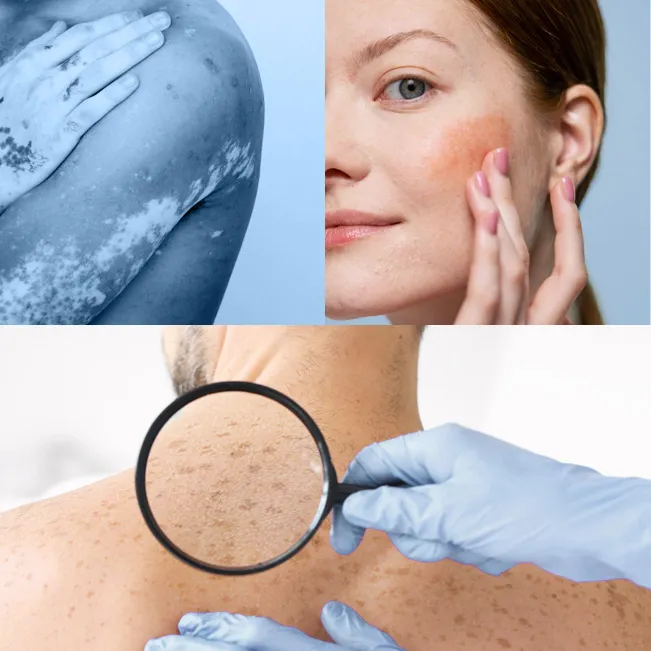
The types of pigment disorders we treat include:
- Melasma
: According to Cleveland Clinic, melasma appears as brown or tan patches on the forehead, upper lip, nose, cheeks, and chin. Men and women can develop this condition, although it is most common in pregnant women.
Vitiligo: Vitiligo is an autoimmune skin condition that can cause you to lose pigmentation in patches on your skin. These patches can spread over time, so many patients pursue medical treatment. Depending on which body parts vitiligo affects, we may diagnose you with universal vitiligo, acrofacial vitiligo, generalized vitiligo, localized vitiligo, or segmental vitiligo.
Depending on your diagnosis, we may prescribe light therapy, skin grafting, anti-inflammatory drugs, or a combination of these methods. If you notice that your condition is worsening or your pigment disorder is beginning to affect new areas of your body, inform your doctor. Documenting your condition with photos can help your doctor see its progression and adjust your treatment if necessary.
Speak to a Doctor Now
Learn More About How Our Physicians Treat Pigment Disorders
If you’re suffering from a loss of confidence because of a pigment disorder, the team at Palm Beach Dermatology Group is here to support you. We can develop a strategy to treat your condition and restore your self-esteem. Our experienced team is eager to hear from you and determined to help you look and feel your best.
Call Palm Beach Dermatology Group today at (561) 499-0660 to schedule your appointment.
Schedule Your Appointment
Request Your Appointment
Prefer to call? (561) 499-0660