
How Long Does Eczema Last? Duration, Flares, and Recovery
Key Takeaways
- Eczema does not follow a fixed timeline: a mild flare may improve within days, while more severe or persistent flares can last for weeks.
- The skin needs time to repair itself: even after redness and itching improve, dryness, discoloration, or sensitivity may remain for a while.
- Triggers can prolong a flare: irritants, weather changes, sweating, stress, and repeated scratching can keep eczema active.
- Recurring eczema needs a different approach: identifying triggers and using consistent skin care can help reduce future flares rather than simply treating each episode as it appears.
Eczema can be frustrating partly because there is no single timeline for how long it lasts. For some people, a flare may settle within a few days. For others, irritated skin can linger for several weeks, especially when the trigger continues or treatment is not working well.
It is also common to think of eczema as something that should disappear permanently after one episode. In reality, eczema is often a long-term skin condition with periods when the skin is calm and periods when symptoms return.
So, how long does eczema last? The answer depends on the type of eczema, the severity of the flare, the person’s age, the affected area, and how quickly the skin receives appropriate care.
This guide explains what you can generally expect, what makes eczema last longer, and when persistent symptoms deserve medical attention.
How Long Does an Eczema Flare Last?
A mild eczema flare can improve within several days when the skin is protected from its trigger and appropriate treatment is started. More significant flares can last a few weeks or longer.
There is no fixed number of days that applies to everyone.
A flare may begin with itching, dryness, redness, or small bumps. The skin can then become inflamed, cracked, scaly, or sore. Once the inflammation is brought under control and the skin barrier begins recovering, the symptoms gradually become less noticeable.
If the skin continues to be exposed to something that irritates it, however, the flare may keep coming back or fail to settle.
For that reason, the duration of eczema is not determined only by the condition itself. What happens to the skin during the flare matters too.
Is Eczema a Temporary or Long-Term Condition?
Eczema can be either temporary in terms of symptoms or long-term as a condition.
A person may experience a flare that clears and then have no symptoms for a period of time. Another person may have eczema that repeatedly returns throughout the year.
Atopic dermatitis, the most common form of eczema, is often a chronic condition. It can improve significantly or even disappear for long periods, particularly as some children get older, but it can also continue into adulthood.
This distinction is important.
A flare ending does not necessarily mean that a person can never experience eczema again. It simply means the active symptoms have settled.
How Long Does Eczema Last in Children?
Eczema commonly begins during childhood, particularly in the first few years of life.
Some children experience eczema for a relatively short period and eventually have fewer symptoms as they grow. Others continue to have flares into their teenage years or adulthood.
The course can vary considerably from child to child.
For a young child, eczema may appear on the face, scalp, or the outside of the arms and legs. As children get older, it often affects areas such as the hands, elbows, and knees.
If a child’s eczema is persistent, uncomfortable, interfering with sleep, or becoming infected, it is worth discussing it with a pediatrician or dermatologist.
Read: [What triggers eczema in babies and Infants?]
How Long Does Adult Eczema Last?
Adult eczema can follow a similar pattern of flares and periods of improvement.
Some adults develop eczema for the first time later in life, while others have had it since childhood.
A flare can improve with appropriate treatment, but the underlying tendency toward eczema may remain.
Adults may also encounter triggers that make symptoms more difficult to control. Frequent handwashing, cleaning products, workplace chemicals, dry weather, stress, and certain fabrics can all contribute to skin irritation in susceptible people.
When eczema repeatedly affects the same area, identifying what is triggering the irritation can be just as important as treating the visible rash.
Why Does Eczema Sometimes Take So Long to Clear?
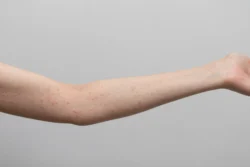
Eczema involves inflammation and a weakened skin barrier.
When the skin barrier is damaged, it loses moisture more easily and becomes more vulnerable to irritants. This can create a cycle:
dryness → irritation → itching → scratching → more skin damage → more inflammation
Once this cycle gets established, the skin may need time to recover.
Scratching can be particularly troublesome. It may provide temporary relief from itching, but repeated scratching can damage the skin and make inflammation worse.
A flare can also last longer when treatment is stopped as soon as the skin starts looking better, when the original trigger remains present, or when the condition is actually another type of dermatitis or skin problem.
What Can Trigger an Eczema Flare?
Eczema triggers are not the same for everyone.
Common triggers can include:
- Dry air
- Hot or cold weather
- Sweating
- Fragranced skin products
- Harsh soaps
- Household cleaning products
- Certain fabrics
- Dust or other environmental factors
- Stress
- Scratching
- Frequent exposure to water
- Workplace irritants
Some people notice that their eczema becomes worse during winter because cold outdoor air and indoor heating can reduce humidity.
Others find that hot weather and sweating cause problems.
Keeping track of when flares occur can sometimes reveal a pattern that is otherwise easy to miss.
Does Stress Make Eczema Last Longer?
Stress does not cause every case of eczema, but it can contribute to flare-ups or make existing symptoms harder to manage.
There is also a practical connection between stress and itching. When someone is stressed or tired, they may be more likely to scratch without realizing it.
Poor sleep can then make the following day more difficult, creating another cycle that can affect how manageable the eczema feels.
If stress appears to coincide with repeated flares, addressing sleep, relaxation, and other sources of stress may be useful alongside appropriate skin care and medical treatment.
How Long Does Eczema Take to Heal After Scratching?
Scratched skin can take longer to recover because the surface has been repeatedly damaged.
Minor irritation may settle relatively quickly once scratching stops, while cracked, raw, or severely inflamed skin can take considerably longer.
There is also a risk of infection when the skin barrier has been broken.
Signs that scratched eczema may have become infected include increasing pain, warmth, swelling, pus, crusting, or rapidly worsening redness. Fever or feeling generally unwell can also be concerning.
These symptoms should be assessed by a healthcare professional rather than treated as an ordinary eczema flare.
Does Eczema Go Away Permanently?
Sometimes eczema becomes much less noticeable or disappears for long periods, but there is no guarantee that it will never return.
Some children eventually stop experiencing frequent symptoms. Adults may also have long periods when their skin is clear.
However, eczema can return when the skin encounters a trigger or when the skin barrier becomes compromised.
The goal is therefore not always to eliminate eczema forever. For people with recurrent eczema, the focus is often on keeping the skin barrier healthy, controlling inflammation, identifying triggers, and reducing the frequency and severity of flares.
How Can You Help an Eczema Flare Settle Faster?
There is no guaranteed way to make every flare disappear immediately, but consistent skin care can help support recovery.
Moisturize Regularly
Moisturizers help reduce water loss and support the skin barrier.
For eczema-prone skin, thicker creams or ointments are often preferred over very lightweight lotions. Apply moisturizer regularly, particularly after bathing or washing.
Use Gentle Cleansers
Harsh soaps can strip oils from the skin and make dryness worse.
Choose gentle, fragrance-free products when possible and avoid scrubbing irritated areas.
Keep Showers Comfortable
Very hot water can make already-dry skin feel worse.
A lukewarm shower is generally a better choice, followed by moisturizer while the skin is still slightly damp.
Avoid Known Triggers
If you know that a particular product, fabric, activity, or environmental condition causes a flare, reducing exposure can make it easier for the skin to recover.
Follow Prescribed Treatment
If a healthcare professional has prescribed a topical steroid or another eczema treatment, use it according to the directions provided.
Stopping or changing treatment on your own can sometimes allow inflammation to return.
Read: [Does hydrocortisone help eczema?]
How Long Does Eczema Treatment Take to Work?
Treatment response varies according to the severity of the eczema and the treatment being used.
Some people notice improvement within several days, while more severe inflammation can take longer to settle.
The skin may also look better before it feels completely normal. Itching or dryness can sometimes continue after the most obvious redness has decreased.
If treatment does not seem to be helping, the answer is not necessarily to keep applying more of it. The diagnosis may need to be reviewed, the treatment may need adjustment, or another trigger may be keeping the inflammation active.
When Should You See a Dermatologist?
Occasional mild eczema may be manageable with basic skin care, but persistent or troublesome symptoms deserve professional attention.
Consider seeing a dermatologist if:
- Your eczema keeps returning.
- The rash is spreading.
- It is interfering with sleep.
- It is painful rather than simply itchy.
- Over-the-counter products are not helping.
- Your skin is cracking or bleeding frequently.
- You are unsure whether the rash is actually eczema.
- You are experiencing signs of infection.
- The condition is affecting your daily activities.
A dermatologist can determine whether the symptoms are consistent with eczema and recommend treatment based on the severity and location of the condition.
Can Eczema Last for Years?
Yes, eczema can be a long-term condition.
Some people have occasional flares separated by months or years of clear skin. Others experience symptoms more frequently.
Long-lasting eczema does not necessarily mean that the skin will remain severely inflamed all the time. With appropriate management, many people are able to keep their symptoms under control and experience extended periods of clearer skin.
The pattern can also change over time.
Someone who had frequent eczema as a child may have much milder symptoms as an adult, while another person may develop persistent eczema later in life.
Why Is Eczema Different for Everyone?
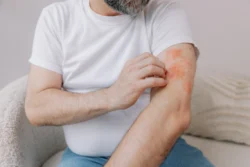
Eczema is not one identical condition with one identical cause.
There are several forms, including atopic dermatitis, contact dermatitis, dyshidrotic eczema, nummular eczema, and seborrheic dermatitis. Their appearance, triggers, and typical locations can differ.
Even among people with the same type of eczema, the course can be different.
Genetics, immune system activity, skin-barrier function, environment, climate, lifestyle, and exposure to irritants can all influence symptoms.
That is why comparing your recovery time with someone else’s is not always useful.
A friend’s eczema may clear within a few days while yours takes longer, without either experience being unusual.
What If Eczema Keeps Coming Back?
Repeated flares are a sign that it may be useful to look beyond the immediate rash.
Think about what was happening before each flare. Did the weather change? Did you start using a new product? Were you washing your hands more frequently? Did you spend more time sweating? Did you change detergents, clothing, or skincare products?
Keeping a simple record can help identify patterns.
For people with frequent flares, a dermatologist can also help create a longer-term management plan rather than treating each episode as an isolated problem.
Read: [How To Prevent Eczema?]
Can Eczema Leave Marks After It Clears?
Yes. Even after active eczema improves, the skin may not immediately return to its previous appearance.
Some people develop temporary areas of darker or lighter skin after inflammation has settled. This is known as post-inflammatory color change. The marks can take time to fade and may be more noticeable in people with darker skin tones.
This does not necessarily mean that the eczema is still active. If the skin remains itchy, red, thickened, cracked, or inflamed, however, there may still be ongoing eczema that needs attention.
Frequently Asked Questions
Can eczema disappear on its own?
Mild eczema may improve without prescription treatment, especially when triggers are avoided and the skin is moisturized regularly. However, persistent symptoms may need treatment.
Does eczema get worse before it gets better?
It can. A flare may become more inflamed or itchy before treatment starts to work, particularly if the trigger continues to affect the skin.
Can changing the weather affect eczema?
Yes. Cold, dry weather and sudden changes in humidity can affect eczema-prone skin. Some people also experience more symptoms during hot, humid weather.
Can eczema appear suddenly?
Yes. Eczema can develop suddenly, even in someone who has never experienced it before. A new irritant, allergy, environmental change, or other factor may be involved.
Does eczema spread from one person to another?
No. Eczema is not contagious and cannot be passed from one person to another through touching, sharing clothing, or close contact.
Can eczema come back after years?
Yes. Someone can have clear skin for a long period and later experience another flare. Triggers and individual skin sensitivity can change over time.
Does eczema always itch?
Itching is very common with eczema, but symptoms can vary. Some people may also experience dryness, scaling, cracking, redness, or thickened skin.
Can eczema affect the same area repeatedly?
Yes. Certain areas may be more prone to recurring flares, especially when they are repeatedly exposed to an irritant or experience friction, dryness, or moisture.
Can eczema leave permanent scars?
Eczema itself does not usually cause permanent scars, but severe scratching or repeated skin damage can sometimes leave lasting changes. Avoiding scratching can help protect the skin.
Can diet affect how long eczema lasts?
Diet may influence eczema symptoms for some people, but there is no single diet that works for everyone. Avoiding foods without professional guidance is not recommended unless a food allergy or intolerance has been identified.
Conclusion
So, how long does eczema last? There is no universal timeline. A mild flare may improve within days, while a more stubborn episode can last for weeks. Eczema can also return periodically because the underlying tendency toward the condition may remain even after the skin clears.
The key is to pay attention to what your skin is telling you. Regular moisturizing, gentle skin care, avoiding known irritants, and following recommended treatment can all help manage symptoms. If eczema continues despite your efforts, keeps returning, affects your sleep, or shows signs of infection, a dermatologist can help determine what is keeping it active.
Most importantly, do not assume that persistent itching or a long-lasting rash is automatically eczema. Several other skin conditions can look similar. When symptoms do not improve or keep coming back, getting the right diagnosis is an important part of finding the right treatment.
Medical Disclaimer – This blog about eczema is intended for general informational purposes only and should not be considered medical advice. Eczema can affect people differently, and persistent, severe, or worsening symptoms should be evaluated by a qualified healthcare professional.

Comprehensive Skincare for Patients of All Ages
BOOK AN APPOINTMENTSince 1982, Palm Beach Dermatology Group has developed treatment plans that reflect our patients’ goals for healthy and beautiful skin. The doctors and professionals on our team have attended top schools, like Brown University, NYU, and the University of Miami, received special honors, and contributed to esteemed medical journals.
Our background and knowledge of the latest pharmaceutical technologies enable us to uphold the highest safety standards and deliver quality service and care to our patients. At PGA Dermatology Skin & Aesthetics Center, we make you feel comfortable and treat you like family from the moment you step inside our waiting room.