What Triggers Eczema in Babies and Infants?
Key Takeaways
- Multiple Triggers Cause Baby Eczema: Eczema in babies isn't caused by a single factor, but rather by a combination of genetics, dry skin, and environmental triggers.
- Everyday Irritants Frequently Cause Flare-Ups: Common everyday triggers include harsh soaps, artificial fragrances, rough fabrics, overheating, cold air, and saliva from teething.
- Daily Moisturizing Is Essential for Prevention: The most effective management involves bathing in short, lukewarm water and applying thick, fragrance-free moisturizers immediately afterward to lock in moisture.
- Food Allergies Are Not the Primary Cause: Although certain foods like milk or eggs can trigger flare-ups in sensitive infants, food allergies do not cause eczema in most babies.
- Medical Care Is Required for Signs of Infection: Seek medical attention if eczema causes sleep loss, fails to improve, spreads rapidly, or shows signs of infection like oozing or fever.
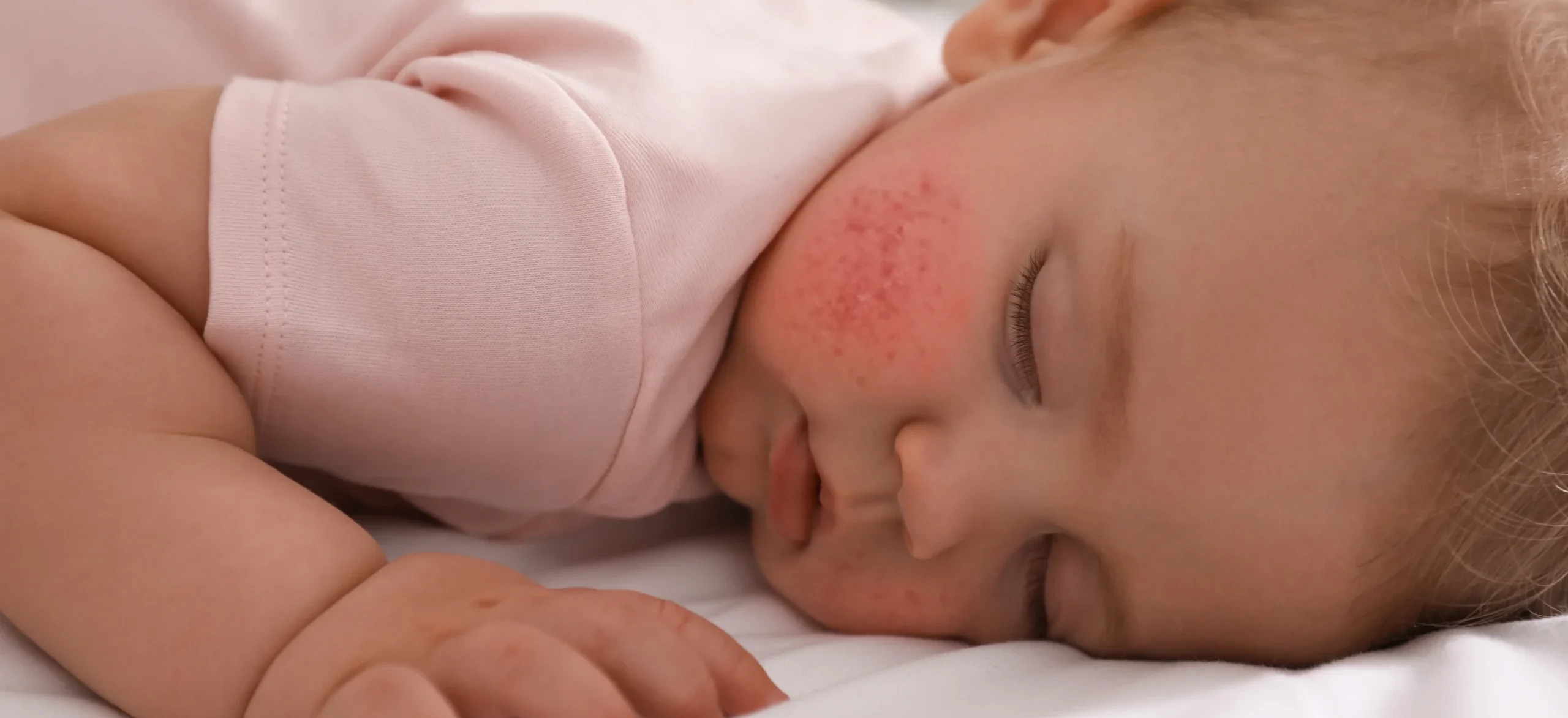
Eczema is one of the most common skin conditions in babies and infants. It causes dry, itchy, and irritated skin that can make little ones uncomfortable and fussy. Many parents notice red patches on their baby’s cheeks, arms, legs, or other parts of the body and wonder what caused it.
The truth is that eczema does not have just one trigger. Many different things can cause a baby’s eczema to flare up. Some babies are born with a higher chance of developing eczema because of their family history, while others react to certain environmental factors, weather, or skin irritants.
Learning what triggers eczema can help parents reduce flare ups and keep their baby’s skin healthier and more comfortable. In this guide, we will explain the most common eczema triggers in babies and infants, how to identify them, and what you can do to protect your child’s skin.
What Is Eczema?
Eczema, also called atopic dermatitis, is a long lasting skin condition that damages the skin’s natural protective barrier. Healthy skin keeps moisture in and harmful substances out. In babies with eczema, this barrier does not work as well.
As a result, the skin becomes:
- Dry
- Red
- Itchy
- Rough
- Sensitive
- Easily irritated
Scratching the itchy areas can make eczema worse and increase the risk of skin infections.
Why Do Babies Get Eczema?
There is no single reason why babies develop eczema. Usually, several factors work together.
These include:
- Genetics
- An overactive immune response
- A weakened skin barrier
- Environmental triggers
- Dry skin
Some babies develop eczema within the first few months of life, while others may not show symptoms until they are older.
Common Triggers of Eczema in Babies and Infants
Understanding these triggers can help reduce flare ups.
Dry Skin
Dry skin is one of the biggest eczema triggers.
When the skin loses moisture, it becomes more likely to crack and become inflamed.
Dry skin can happen because of:
- Cold weather
- Indoor heating
- Low humidity
- Frequent bathing
- Harsh soaps
Keeping the skin well moisturized is one of the most effective ways to prevent eczema flare ups.
Family History
Babies are more likely to develop eczema if close family members have:
- Eczema
- Asthma
- Hay fever
- Seasonal allergies
These conditions are connected through the immune system and often run in families.
A family history does not guarantee that a baby will have eczema, but it increases the likelihood.
Harsh Soaps and Cleansers
Many soaps remove the skin’s natural oils.
Products that contain:
- Strong fragrances
- Alcohol
- Dyes
- Antibacterial ingredients
can irritate sensitive skin and trigger eczema.
Instead, use fragrance free cleansers made for babies with sensitive skin.
Laundry Detergents
Some detergents leave chemicals on clothing and bedding that can irritate eczema prone skin.
This is especially true for detergents with:
- Strong perfumes
- Brighteners
- Fabric softeners
Switching to fragrance free detergents may help reduce irritation.
Rough Clothing
The clothes your baby wears can affect eczema.
Some fabrics can rub against the skin and increase itching.
Common irritating fabrics include:
- Wool
- Rough synthetic materials
- Tight clothing
Soft cotton clothing is usually the best choice for babies with eczema.
Heat and Sweating
Overheating is a common eczema trigger.
When babies become too warm, sweat can irritate their skin and make itching worse.
This often happens:
- During hot weather
- After playing
- Under heavy blankets
- In overheated rooms
Dress babies in lightweight layers and keep rooms comfortably cool.
Cold Weather
Winter weather often makes eczema worse.
Cold air contains less moisture, while indoor heating dries out the skin even more.
During winter:
- Use a humidifier if needed.
- Moisturize more often.
- Avoid very hot baths.
Saliva
Many babies drool throughout the day.
Saliva sitting on the cheeks, chin, or neck can irritate the skin and trigger eczema around the mouth.
This is especially common during teething.
Gently wipe away drool and apply a protective moisturizer if recommended by your child’s healthcare provider.
Certain Foods
Food allergies do not cause eczema in every baby.
However, in some children, certain foods may trigger eczema flare ups.
Possible food triggers include:
- Cow’s milk
- Eggs
- Peanuts
- Wheat
- Soy
- Fish
Do not remove foods from your baby’s diet without speaking to a healthcare provider, especially in young infants.
Dust Mites
Dust mites are tiny organisms that live in bedding, carpets, and soft furniture.
Some babies with eczema are sensitive to dust mites, which may worsen symptoms.
Ways to reduce exposure include:
- Washing bedding weekly in hot water.
- Vacuuming regularly.
- Keeping stuffed toys clean.
- Reducing dust in the home.
Pet Dander
Some babies react to proteins found in:
- Cats
- Dogs
- Other furry animals
Pet dander may not cause eczema directly, but it can make existing eczema worse in sensitive children.
Pollen
Seasonal pollen can trigger eczema in babies who also have environmental allergies.
Parents may notice more flare ups during spring or fall.
Keeping windows closed during high pollen days and washing hands after outdoor activities may help.
Cigarette Smoke
Secondhand smoke can irritate a baby’s skin and airways.
It may increase inflammation and make eczema symptoms worse.
Babies should never be exposed to cigarette smoke.
Stress
Although babies do not experience stress the same way adults do, emotional distress, illness, disrupted sleep, or discomfort can sometimes contribute to eczema flare ups.
Older infants may scratch more when they are tired or upset.
Keeping a calming routine can help reduce scratching.
Viral or Bacterial Infections
Illnesses can sometimes trigger eczema flare ups.
Skin damaged by eczema is also more likely to become infected.
Signs of skin infection include:
- Yellow crusts
- Pus
- Swelling
- Fever
- Rapidly worsening redness
Seek medical attention if these symptoms appear.
Fragrances in Skincare Products
Baby lotions, shampoos, bubble baths, and creams with added fragrance may irritate eczema prone skin.
Choose products labeled:
- Fragrance free
- Dye free
- For sensitive skin
Simple skincare routines often work best.
Bubble Baths
Bubble baths may seem fun, but they often contain ingredients that dry the skin. Frequent bubble baths can remove natural oils and increase eczema symptoms.
Plain lukewarm baths followed by moisturizer are usually a better option.
Chlorine
Swimming pools contain chlorine, which may irritate some babies with eczema.
Others actually improve after swimming because chlorine can reduce bacteria on the skin.
After swimming:
- Rinse your baby with clean water.
- Apply moisturizer immediately.
How Can You Identify Your Baby’s Triggers?
Every baby is different.
Keeping a simple eczema diary may help identify patterns.
Write down:
- Foods eaten
- Weather conditions
- New skincare products
- Laundry products
- Clothing materials
- Flare up dates
- Sleep patterns
After a few weeks, you may begin to notice certain triggers.
How to Help Prevent Eczema Flare Ups
Although eczema cannot always be prevented, daily skin care can greatly reduce flare ups.
Moisturize Every Day
Apply a thick moisturizer several times daily, especially after bathing. Moisturizers help repair the skin barrier and reduce dryness.
Use Lukewarm Water
Keep baths short, around 5 to 10 minutes. Hot water removes natural oils and can dry the skin.
Pat Skin Dry
Do not rub your baby’s skin with a towel.
Instead, gently pat the skin dry and apply moisturizer while the skin is still slightly damp.
Choose Gentle Products
Use fragrance free:
- Soap
- Shampoo
- Moisturizer
- Laundry detergent
The fewer irritating ingredients, the better.
Keep Fingernails Short
Babies often scratch without realizing it. Short nails reduce skin damage and lower the risk of infection.
Dress Your Baby Comfortably
Choose loose fitting cotton clothing that allows the skin to breathe. Avoid overheating by dressing babies appropriately for the weather.
Avoid Known Triggers
Once you identify your baby’s triggers, try to reduce exposure whenever possible.

When Should You See a Doctor?
You should contact your child’s healthcare provider if:
- Eczema is severe.
- Home treatment is not helping.
- Your baby is losing sleep from itching.
- The skin looks infected.
- There is bleeding or oozing.
- The rash spreads quickly.
- Your baby develops a fever.
Doctors may recommend prescription creams or other treatments if needed.
Can Babies Outgrow Eczema?
Many children improve as they grow older.
Some babies outgrow eczema before starting school, while others continue to have occasional flare ups throughout childhood or adulthood.
Even if eczema improves, maintaining healthy skin care habits remains important.
Tips for Parents
Living with eczema can be challenging, but small daily habits can make a big difference.
Remember to:
- Moisturize regularly.
- Avoid harsh skincare products.
- Dress your baby in soft fabrics.
- Prevent overheating.
- Keep the skin clean but not overly washed.
- Watch for signs of infection.
- Work with your child’s healthcare provider if symptoms become severe.
Every baby is unique, so finding the right skincare routine may take some time.
Frequently Asked Questions
Can teething cause eczema in babies?
Teething itself does not cause eczema, but increased drooling during teething can irritate the skin around the mouth and chin, leading to eczema flare ups in those areas.
Does bathing every day make eczema worse?
Not necessarily. Short, lukewarm baths followed immediately by a thick moisturizer can actually help many babies. Long or hot baths are more likely to dry out the skin.
Can breastfeeding prevent eczema?
Breastfeeding offers many health benefits, but research shows it does not guarantee that a baby will not develop eczema. Genetics and other factors also play important roles.
Is eczema contagious?
No. Eczema cannot spread from one baby to another through touching or close contact.
Can weather changes trigger eczema?
Yes. Both cold, dry weather and hot, humid conditions with sweating can trigger eczema flare ups in some babies.
Should babies with eczema avoid swimming?
Not always. Some babies tolerate swimming well. Rinsing off chlorine and applying moisturizer after swimming can help protect the skin.
Does eczema always mean a food allergy?
No. Most babies with eczema do not have food allergies. Only some children have eczema that is linked to certain foods.
Can pets make eczema worse?
For babies who are sensitive to pet dander, exposure to cats or dogs may worsen eczema symptoms.
How often should moisturizer be applied?
Many healthcare providers recommend applying moisturizer at least twice a day and whenever the skin appears dry.
Can eczema be cured?
There is currently no permanent cure for eczema, but proper skincare and avoiding triggers can help control symptoms and reduce flare ups.
Conclusion
Eczema in babies and infants is often triggered by a combination of genetics, dry skin, environmental factors, and everyday irritants. While it can be frustrating to deal with frequent flare ups, understanding your baby’s individual triggers can help you manage the condition more effectively.
Simple habits such as using fragrance free skincare products, moisturizing daily, avoiding overheating, and choosing soft clothing can make a noticeable difference. If eczema becomes severe, keeps returning despite home care, or shows signs of infection, speak with your child’s healthcare provider for proper evaluation and treatment.
With patience and consistent skin care, many babies experience fewer flare ups and enjoy healthier, more comfortable skin as they grow.
Disclaimer: This article is for informational purposes only and is not a substitute for professional medical advice, diagnosis, or treatment. If your baby has persistent or severe eczema symptoms, consult a qualified healthcare provider.

Comprehensive Skincare for Patients of All Ages
BOOK AN APPOINTMENTSince 1982, Palm Beach Dermatology Group has developed treatment plans that reflect our patients’ goals for healthy and beautiful skin. The doctors and professionals on our team have attended top schools, like Brown University, NYU, and the University of Miami, received special honors, and contributed to esteemed medical journals.
Our background and knowledge of the latest pharmaceutical technologies enable us to uphold the highest safety standards and deliver quality service and care to our patients. At PGA Dermatology Skin & Aesthetics Center, we make you feel comfortable and treat you like family from the moment you step inside our waiting room.