How to Cure Dry Skin on Head: Causes, Treatment and Prevention
Key Takeaways
- Dry skin on the head can come from weather, hot water, frequent washing, harsh hair products, or an underlying scalp condition.
- A dry scalp and dandruff can look similar, but they are not always the same problem and may require different treatments.
- Using a gentle shampoo, lukewarm water, and fewer irritating hair products can help manage mild scalp dryness.
- Persistent flakes, severe itching, redness, thick scales, sores, or hair loss may point to a condition that needs professional evaluation.
- The most effective approach is to identify the reason for the dryness first, rather than repeatedly trying different scalp products.
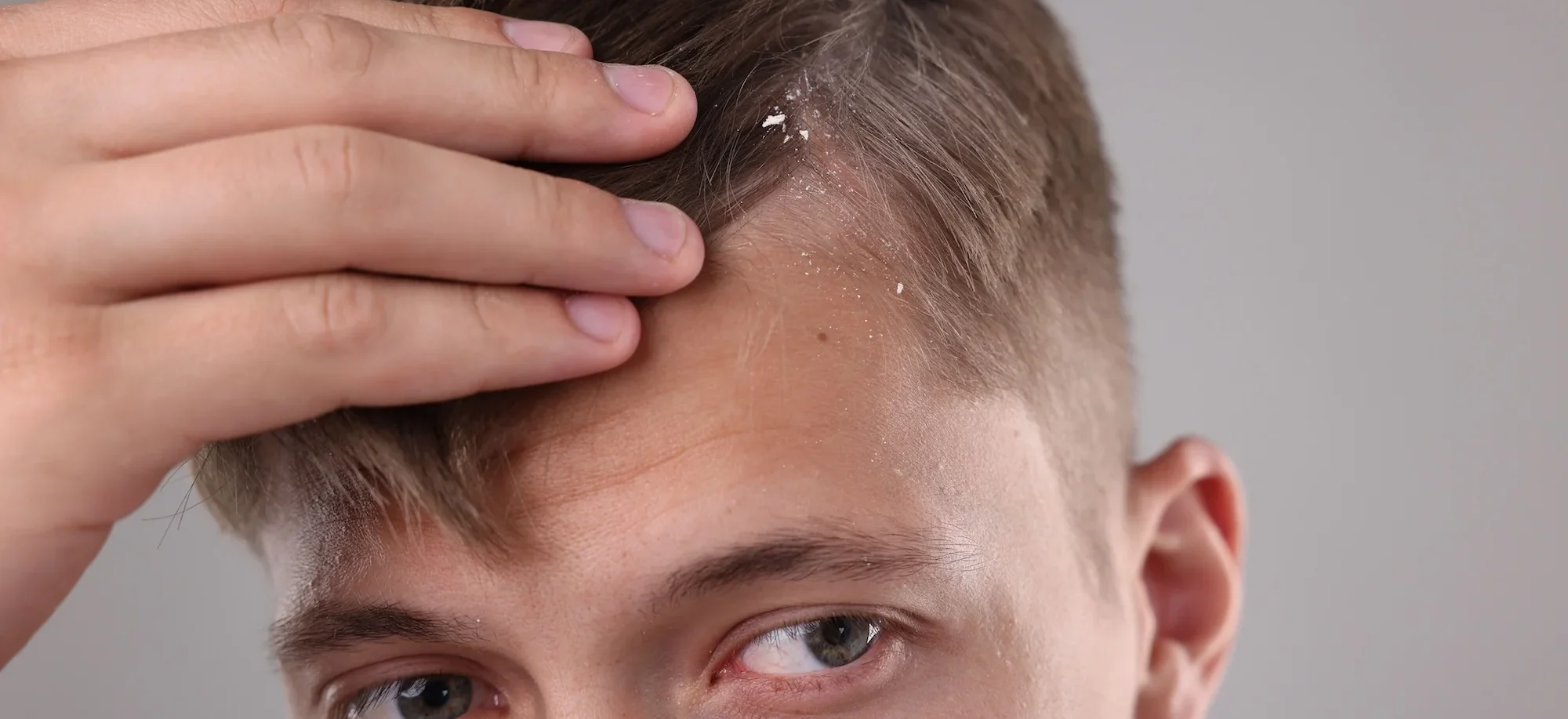
Dry skin on the head, often called a dry scalp, is a common problem. It can cause itching, flaking, tightness, irritation, and small white flakes that may fall onto your hair or clothes. In many cases, simple changes to your hair care routine can improve the problem.
However, a dry scalp is not always caused by simple dryness. Dandruff, seborrheic dermatitis, eczema, psoriasis, allergic reactions, and fungal infections can produce similar symptoms. That is why finding the cause is important before trying different treatments.
The good news is that most mild cases can be managed with proper scalp care. The right treatment depends on whether your scalp is simply dry or whether another condition is causing the flaking.
What Causes Dry Skin on the Head?
Dry scalp happens when the skin on your scalp loses too much moisture. Several things can contribute to this.
Cold or Dry Weather
Cold weather and low humidity can remove moisture from the skin. Indoor heating can also make the air dry, which may make scalp dryness worse.
You may notice more dryness during winter or when spending a lot of time in air-conditioned or heated environments.
Hot Showers
Very hot water can strip natural oils from the skin. If you frequently wash your hair with hot water, your scalp may become dry and irritated.
Try using lukewarm water instead.
Harsh Hair Products
Some shampoos, conditioners, hair dyes, sprays, gels, and styling products can irritate the scalp.
Fragrances and certain ingredients may be particularly irritating for people with sensitive skin.
If your scalp became dry after starting a new hair product, consider stopping that product and seeing whether your symptoms improve.
Washing Your Hair Too Often
Washing removes oil and buildup from the scalp, but excessive washing can sometimes contribute to dryness, especially if you use a strong shampoo.
Your ideal washing frequency depends on your hair type, scalp oiliness, hairstyle, and products you use.
Dandruff
Dandruff can look similar to a dry scalp because both can cause flakes and itching.
However, dandruff is not simply caused by having a dry scalp. It can be associated with oily skin, hair-care habits, and a yeast that naturally lives on the skin.
This distinction matters because the treatment for dandruff can be different from the treatment for simple dry skin.
Dry Scalp vs. Dandruff
It can be difficult to tell the difference between dry scalp and dandruff.
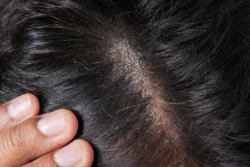
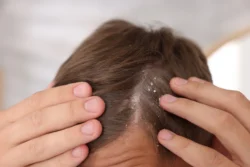
A dry scalp often produces small, dry flakes and may feel tight or irritated. Switching to a gentle, non-medicated shampoo may help.
Dandruff can also cause flakes and itching but may be associated with an oily scalp or recurring scaling. Anti-dandruff shampoos are commonly used to manage it.
If you are unsure which problem you have, a dermatologist can examine your scalp and determine the likely cause.
How to Cure Dry Skin on Head
There is no single treatment that works for every dry scalp because the cause can be different from person to person.
For straightforward scalp dryness, start with gentle care.
Use a Gentle Shampoo
Choose a mild shampoo that does not leave your scalp feeling tight or irritated after washing.
If you suspect that your regular shampoo is causing dryness, switching to a gentle, fragrance-free product may help.
Avoid constantly changing products. Give your scalp enough time to respond before deciding whether a new routine is working.
Wash With Lukewarm Water
Avoid very hot showers.
Use lukewarm water when washing your hair and rinse the shampoo thoroughly. Hot water can make already-dry skin more uncomfortable.
Avoid Scratching Your Scalp
An itchy scalp can make you want to scratch, but repeated scratching can damage the skin.
Scratching may also create small cuts that increase irritation and can potentially introduce infection.
Instead, focus on treating the cause of the itching.
Be Careful With Hair Styling Products
If your scalp is dry or irritated, temporarily reduce the use of products such as gels, sprays, dyes, and heavily fragranced products.
If a particular product causes burning, redness, or itching, stop using it.
Consider a Humidifier
If dry indoor air appears to make your scalp worse, adding moisture to the air may help.
This can be particularly useful during cold weather when indoor heating lowers humidity.
When Should You Use Dandruff Shampoo?
If your problem is actually dandruff rather than simple dry skin, a dandruff shampoo may be more appropriate.
The American Academy of Dermatology lists several active ingredients used in dandruff shampoos, including:
- Ketoconazole
- Selenium sulfide
- Salicylic acid
- Zinc pyrithione
- Sulfur
- Coal tar
The appropriate shampoo and frequency depend on your hair type and the product instructions. Some shampoos need to remain on the scalp for several minutes before rinsing.
If one type does not help, dermatologists may recommend trying another active ingredient.
Do not assume that stronger treatment is always better. Some dandruff products can make the hair itself feel dry, particularly when used incorrectly.
Can You Use Oil on a Dry Scalp?
People commonly use coconut oil, mineral oil, olive oil, or other oils for scalp dryness.
Oil may temporarily make the scalp feel less dry, but it does not treat every condition that causes scalp flaking.
For example, if the problem is dandruff or seborrheic dermatitis, simply applying more oil may not address the underlying problem.
If you want to try an oil, use a small amount and stop if it causes itching, redness, burning, or increased flaking.
Can Moisturizer Help a Dry Scalp?
Moisturizers can help dry skin, but applying a typical face or body moisturizer directly to the scalp may not always be practical.
Dermatologists may recommend specific products depending on the cause and severity of dryness. Ingredients commonly used in products for dry skin include ceramides, glycerin, urea, lactic acid, and petrolatum.
If your scalp is extremely dry, painful, cracked, or repeatedly irritated, professional advice is better than experimenting with multiple products.
What If the Dry Scalp Is Actually Eczema?
Eczema can cause dry, itchy, irritated, and flaky skin. It can affect the scalp as well as other parts of the body.
If you have eczema, simply treating the scalp as ordinary dryness may not be enough. Treatment may involve specific moisturizers or medications recommended by a healthcare professional.
People with eczema can also be sensitive to fragrances and other ingredients in hair products.
If you have a history of eczema and your scalp symptoms keep returning, talk to a dermatologist.
What If It Is Scalp Psoriasis?
Scalp psoriasis can sometimes look like severe dandruff.
It may cause thick patches, scaling, itching, burning, and inflammation. Some people may also notice temporary hair loss around affected areas.
Psoriasis requires a different approach from ordinary dry skin. Depending on the severity, treatment may include medicated shampoos, topical medications, scale-softening products, light therapy, or other treatments prescribed by a dermatologist.
Could a Fungal Infection Cause a Dry Scalp?
Yes.
A fungal infection called tinea capitis, commonly known as scalp ringworm, can cause scaling and itching. It may also cause broken hairs or patches of hair loss.
This is particularly important because scalp ringworm generally requires prescription antifungal treatment rather than simply using moisturizer or ordinary shampoo.
If you notice scaly patches combined with hair loss or broken hairs, have your scalp evaluated by a healthcare professional.
How to Prevent Dry Skin on the Head
Once your scalp improves, a few simple habits may help prevent the problem from returning.
Choose Hair Products Carefully
Look for products that are gentle and suitable for your scalp.
If your skin is sensitive, fragrance-free products may be a better choice.
Don’t Use Extremely Hot Water
Keep showers comfortably warm rather than very hot.
Don’t Overuse Styling Products
Give your scalp breaks from products that cause buildup or irritation.
Don’t Scratch
If your scalp is itchy, treating the cause is more useful than repeatedly scratching the skin.
Keep Your Scalp Clean
Regular washing helps remove oil, dead skin, microorganisms, and product buildup. The ideal frequency depends on your hair and scalp type.
When Should You See a Doctor?
A mild dry scalp often improves with simple changes to your hair care routine.
However, you should consider seeing a dermatologist or other healthcare professional if:
- Your scalp is very itchy
- You have significant redness or swelling
- Your scalp is painful
- You develop sores or crusting
- You notice patches of hair loss
- You have thick or silvery scales
- Your scalp symptoms keep returning
- Over-the-counter treatment does not help
- Symptoms continue for several weeks
- The problem is spreading to your face or other parts of your body
Persistent symptoms can sometimes indicate seborrheic dermatitis, psoriasis, eczema, contact dermatitis, or a fungal infection.
How Long Does It Take for a Dry Scalp to Heal?
The answer depends on the cause.
Simple dryness caused by weather, hot water, or irritating products may improve after changing your routine. The American Academy of Dermatology notes that when dry skin is successfully managed with appropriate self-care, improvement can often occur within about two weeks.
Dandruff and other scalp conditions can take longer and may require ongoing treatment.
If your symptoms are not improving, continuing to add more products is not necessarily the answer. A proper diagnosis may be more useful.
FAQs
Can dehydration cause a dry scalp?
Not drinking enough fluids may affect overall skin health, but scalp dryness is usually more closely related to environmental conditions, skin conditions, and hair-care practices.
Can stress cause a dry scalp?
Stress can sometimes worsen existing skin conditions such as eczema or dandruff, although it is not usually the only cause of a dry scalp.
Can wearing a hat cause a dry scalp?
Wearing a hat does not normally cause dry skin by itself, but heat, sweat, friction, or an unwashed hat may contribute to scalp irritation in some people.
Can dry scalp cause hair loss?
Simple dryness does not usually cause permanent hair loss. However, severe itching and repeated scratching can damage the scalp and contribute to temporary hair shedding or breakage.
Is dry scalp contagious?
Simple dry skin is not contagious. However, certain infections that cause scalp scaling, such as scalp ringworm, can spread between people.
Can changing shampoo suddenly cause scalp dryness?
Yes. A new shampoo may contain ingredients that irritate or dry your scalp, particularly if you have sensitive skin.
Can hard water make the scalp dry?
Hard water may leave mineral deposits on the hair and scalp and can contribute to dryness or irritation for some people, although it is not the only possible cause.
Can dry scalp cause dandruff?
Dry scalp and dandruff are different conditions, although they can produce similar-looking flakes. Dandruff is not simply the result of having dry skin.
Should you wash your hair every day if you have a dry scalp?
Not necessarily. Daily washing can be too drying for some people, while others may need frequent washing because of oil or dandruff. The right frequency depends on your scalp and hair type.
Can a dry scalp go away on its own?
Mild dryness caused by weather or temporary irritation may improve after the trigger is removed. Persistent or recurring symptoms may need evaluation to determine whether another scalp condition is involved.
Conclusion
So, how do you cure dry skin on your head?
Start by figuring out whether you have simple dry skin or something else causing the flakes. For mild dryness, use a gentle shampoo, avoid very hot water, reduce irritating hair products, and avoid scratching your scalp.
If the flakes are persistent, oily, thick, very itchy, painful, or accompanied by redness or hair loss, the problem may be dandruff, eczema, psoriasis, seborrheic dermatitis, or a fungal infection. These conditions can require different treatments.
A dry scalp is usually manageable, but treating the cause rather than just the flakes is the most important step.
Disclaimer: This article is for general educational purposes and does not replace medical advice, diagnosis, or treatment from a qualified healthcare professional.

Comprehensive Skincare for Patients of All Ages
BOOK AN APPOINTMENTSince 1982, Palm Beach Dermatology Group has developed treatment plans that reflect our patients’ goals for healthy and beautiful skin. The doctors and professionals on our team have attended top schools, like Brown University, NYU, and the University of Miami, received special honors, and contributed to esteemed medical journals.
Our background and knowledge of the latest pharmaceutical technologies enable us to uphold the highest safety standards and deliver quality service and care to our patients. At PGA Dermatology Skin & Aesthetics Center, we make you feel comfortable and treat you like family from the moment you step inside our waiting room.