Can Stress Cause Eczema?
Key Takeaways
- Stress acts as a key trigger, not the primary cause: Stress alone doesn't directly cause eczema; it triggers or worsens flare-ups in individuals with an underlying genetic, immune, or skin barrier vulnerability.
- The biological "itch-scratch" stress cycle: Stress releases hormones that compromise the skin barrier and increase inflammation, which leads to itching, scratching, damaged skin, and heightened anxiety that keeps the cycle going.
- Multifactorial nature of flare-ups: While stress is a significant factor, flare-ups are often driven by a combination of triggers, including environmental factors, sweat, harsh soaps, lack of sleep, and specific fabrics.
- Management complements medical treatment: Incorporating stress management, good sleep hygiene, and daily skin hydration helps prevent flares, but it should never replace prescribed dermatological treatments.
- Diagnosis requires professional evaluation: Stress-related eczema looks identical to flare-ups caused by other factors, making medical guidance essential to rule out other conditions or skin infections.
Stress is a normal part of life, but it can affect more than your mood. For some people, periods of stress can also affect their skin. If you notice that your eczema becomes worse during exams, busy periods at work, family problems, or other stressful situations, there may be a connection.
So, can stress cause eczema? Stress does not necessarily cause eczema by itself, but it can trigger or worsen eczema flare-ups in people who are prone to the condition. Stress is recognized as a common eczema trigger.
The relationship can also work both ways. Eczema can cause itching, discomfort, sleep problems, and worry, which may increase stress. This can create a frustrating cycle between stress and eczema symptoms.
How Does Stress Affect Eczema?
When you are stressed, your body responds by releasing stress hormones and activating systems involved in the stress response. These changes can affect the skin and may make it more sensitive to irritation and inflammation.
Research and dermatology guidance suggest that stress can make eczema symptoms worse and contribute to flare-ups.
Stress may also affect the skin barrier. The skin barrier helps keep moisture inside the skin and protects it from outside irritants. When the barrier is not working properly, the skin can become dry, irritated, and more likely to itch.
For someone who already has eczema, these changes may make existing symptoms harder to control.
Can Stress Cause Eczema for the First Time?
Stress may be associated with the appearance of eczema symptoms, but it is not considered the only cause of eczema.
Eczema, particularly atopic dermatitis, involves a combination of factors, including genetics, the skin barrier, the immune system, and environmental triggers. Different people can have different triggers.
Stress can act as one of those triggers, but having a stressful period does not automatically mean someone will develop eczema.
If you develop a new rash, it is also important to consider other possible causes. Several skin conditions can look similar to eczema, so a healthcare professional can help determine what is actually causing the symptoms.
Why Does Eczema Get Worse During Stress?
There are several possible reasons.
Stress can make the skin more reactive and may contribute to inflammation. It can also make itching feel more noticeable.
Another important factor is scratching. When eczema becomes itchy, a person may scratch the affected area without realizing how often they are doing it. Scratching can damage the skin and make irritation worse.
This can create what is often called the itch-scratch cycle. The skin itches, you scratch it, the skin becomes more irritated, and the itching can continue.
Stress and anxiety may make this cycle harder to break.
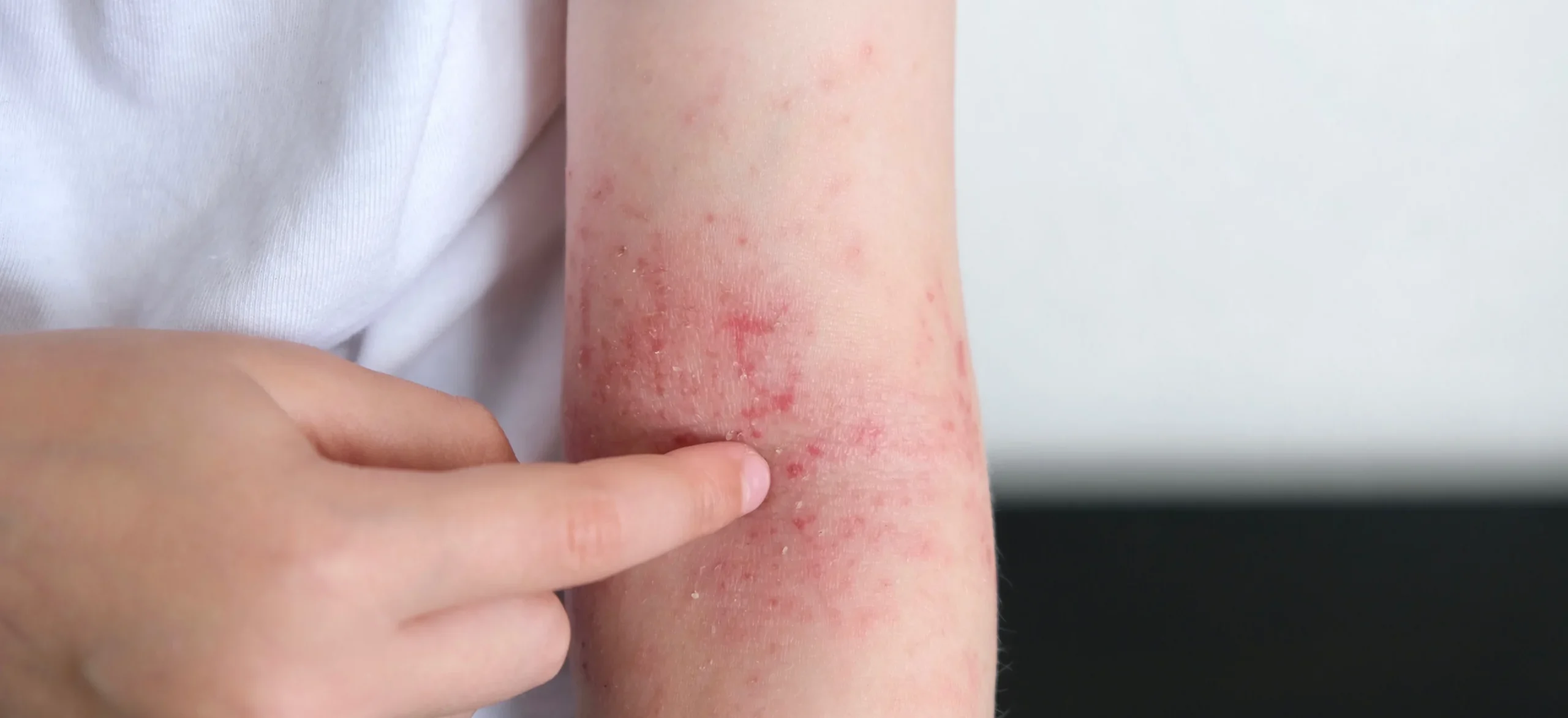
What Does Stress-Related Eczema Look Like?
Stress-related eczema does not necessarily look different from an eczema flare caused by another trigger.
Depending on the type of eczema and the person’s skin tone, symptoms may include:
- Dry or rough skin
- Itching
- Red, brown, purple, or grayish patches
- Swelling
- Cracked skin
- Scaly or thickened skin
- Small bumps
- Areas that become raw from scratching
Eczema can appear on different parts of the body, and symptoms can come and go over time.
Because these symptoms can occur with several types of skin conditions, it is not possible to determine the cause based on appearance alone.
Can Anxiety Make Eczema Worse?
Anxiety and stress can sometimes contribute to eczema flare-ups.
People with eczema may also experience anxiety because of persistent itching, visible skin changes, sleep problems, or concerns about their appearance. This can create a cycle where eczema contributes to stress, while stress may make symptoms worse.
The National Eczema Association notes that stress is one of several possible triggers for atopic dermatitis. Other triggers can include changes in temperature, sweat, fragrances, certain fabrics, and environmental factors.
Can Lack of Sleep Make Eczema Worse?
Poor sleep and eczema can affect each other.
Eczema itching can make it difficult to sleep, particularly during a flare. At the same time, being tired can make it harder to manage stress and maintain regular skin-care habits.
This means that sleep problems may become another part of the cycle. Keeping eczema under control and addressing factors that interfere with sleep can be helpful.
If itching regularly keeps you awake, discussing it with a healthcare professional can help identify appropriate treatment options.
How Can You Tell If Stress Is an Eczema Trigger?
One useful approach is to pay attention to patterns.
For example, you may notice that your eczema tends to flare during particularly stressful periods. You may also notice that symptoms improve when the stressful period passes.
Keeping a simple record of your symptoms can help. Write down when a flare starts and note things such as:
- Stressful events
- Sleep quality
- Weather changes
- New skin-care products
- Foods or other suspected triggers
- Exercise and sweating
- Changes in medication
- Exposure to fragrances or detergents
Eczema can have more than one trigger, and sometimes a flare happens without an obvious cause. The National Eczema Association points out that identifying triggers can be difficult because symptoms may appear after exposure rather than immediately.
Can Reducing Stress Help Eczema?
Reducing stress may help some people experience fewer or less severe flare-ups, particularly when stress is one of their personal triggers. The American Academy of Dermatology notes that managing stress effectively can help reduce eczema flares.
Stress management does not have to mean completely eliminating stress. That is rarely realistic.
Simple habits may include:
- Getting regular sleep
- Taking short breaks during stressful days
- Walking or doing other enjoyable physical activity
- Spending time with friends or family
- Practicing relaxation or breathing exercises
- Taking time away from screens
- Talking to someone when stress becomes difficult to manage
The most useful approach is usually one that is realistic enough to maintain.
Eczema Prevention Tips
There is no guaranteed way to prevent eczema completely, but avoiding personal triggers and protecting the skin barrier can help reduce flare-ups.
- Moisturize regularly: Use a fragrance-free moisturizer to help keep the skin hydrated.
- Use gentle products: Choose mild, fragrance-free soaps, cleansers, and laundry products.
- Avoid known triggers: Pay attention to what causes your symptoms and try to limit exposure.
- Keep showers comfortable: Use lukewarm water instead of very hot water, which can dry out the skin.
- Manage sweating: Sweat can trigger itching for some people, so shower and change clothes after heavy sweating.
- Wear comfortable fabrics: Soft, breathable clothing may be less irritating than rough or scratchy materials.
- Protect your skin: Use gloves or other protection when handling cleaning products or substances that irritate your skin.
- Manage stress: Relaxation, regular activity, and adequate sleep may help if stress is one of your eczema triggers.
- Avoid scratching: Keep nails short and use other ways to soothe itching when possible.
- Follow your treatment plan: If a healthcare professional has prescribed eczema treatment, use it as directed to help control symptoms.
Should You Stop Your Eczema Treatment When Stress Improves?
No. If you have been given an eczema treatment plan, continue following it unless your healthcare professional tells you otherwise.
Reducing stress can be helpful, but it should not replace appropriate eczema care. Dermatologists commonly recommend regular moisturizing, identifying personal triggers, and using prescribed treatments as directed.
Stress management and skin care can work together rather than being treated as alternatives.
What Other Things Can Trigger Eczema?
Stress is only one possible trigger.
Common triggers can include:
- Hot or cold weather
- Changes in humidity
- Sweat
- Fragrances
- Harsh soaps or detergents
- Certain fabrics
- Dry skin
- Environmental allergens
- Irritating skin-care products
Not everyone reacts to the same triggers. A product or condition that causes a flare for one person may have no effect on someone else.
This is why identifying personal patterns can be more useful than trying to avoid every possible eczema trigger.

When Should You See a Doctor?
Consider speaking with a healthcare professional if your eczema is becoming frequent, severe, painful, or difficult to control.
You should also seek medical advice if you are unsure whether a rash is actually eczema. Other skin conditions can cause similar symptoms and may require different treatment.
Signs of a possible skin infection, such as increasing pain, swelling, warmth, pus, or rapidly worsening symptoms, should also be evaluated.
Frequently Asked Questions
Can stress cause eczema on the face?
Stress can contribute to eczema flare-ups on the face in people who are prone to eczema, although other triggers may also be involved.
Can stress cause eczema in adults?
Yes. Adults with eczema may notice more frequent or severe flare-ups during stressful periods.
Can stress cause eczema in children?
Stress can trigger or worsen eczema symptoms in some children. Changes at school, home, or daily routines may sometimes contribute.
Does emotional stress cause itchy skin?
Stress can make itching feel stronger and may increase scratching. This can further irritate already sensitive skin.
Can eczema from stress go away?
A stress-related flare-up may improve when the trigger settles, but eczema can return when other triggers are present.
Can work stress trigger eczema?
Yes. Work-related pressure can act as a trigger for some people, particularly when combined with poor sleep or other factors.
Can stress cause eczema to spread?
Stress may worsen an existing flare-up, but it does not necessarily cause eczema to spread from one area of the body to another.
Can stress cause eczema around the eyes?
Stress may contribute to flare-ups around the eyes in people who are prone to eczema, although skincare products, allergies, and irritants can also play a role.
Does crying make eczema worse?
Crying itself does not cause eczema, but tears, rubbing, or wiping the skin can sometimes irritate sensitive areas.
Can relaxation help prevent eczema flare-ups?
Managing stress may help reduce flare-ups for people whose eczema is triggered by stress, although it is not a guaranteed way to prevent eczema.
Conclusion
So, can stress cause eczema? Stress is not considered the sole cause of eczema, but it can be an important trigger for people who already have the condition or are prone to flare-ups.
Stress may affect inflammation, skin sensitivity, and itching, while eczema itself can create additional stress. This can result in a cycle where one problem makes the other more difficult to manage.
Reducing stress, getting enough sleep, following a consistent skin-care routine, and avoiding known triggers may help reduce flare-ups. However, eczema can be unpredictable, and a flare does not always mean you have done something wrong.
If your symptoms are persistent or difficult to manage, a dermatologist or other healthcare professional can help identify the type of eczema and develop an appropriate treatment plan.
Disclaimer – This content is for general informational purposes only and is not a substitute for professional medical advice, diagnosis, or treatment. Eczema triggers and symptoms can vary from person to person. If your symptoms are severe, persistent, or worsening, consult a qualified healthcare professional.

Comprehensive Skincare for Patients of All Ages
BOOK AN APPOINTMENTSince 1982, Palm Beach Dermatology Group has developed treatment plans that reflect our patients’ goals for healthy and beautiful skin. The doctors and professionals on our team have attended top schools, like Brown University, NYU, and the University of Miami, received special honors, and contributed to esteemed medical journals.
Our background and knowledge of the latest pharmaceutical technologies enable us to uphold the highest safety standards and deliver quality service and care to our patients. At PGA Dermatology Skin & Aesthetics Center, we make you feel comfortable and treat you like family from the moment you step inside our waiting room.